198 Towards Kawasaki Daishi Heiken-ji Temple ( 1 / 3 ).
★
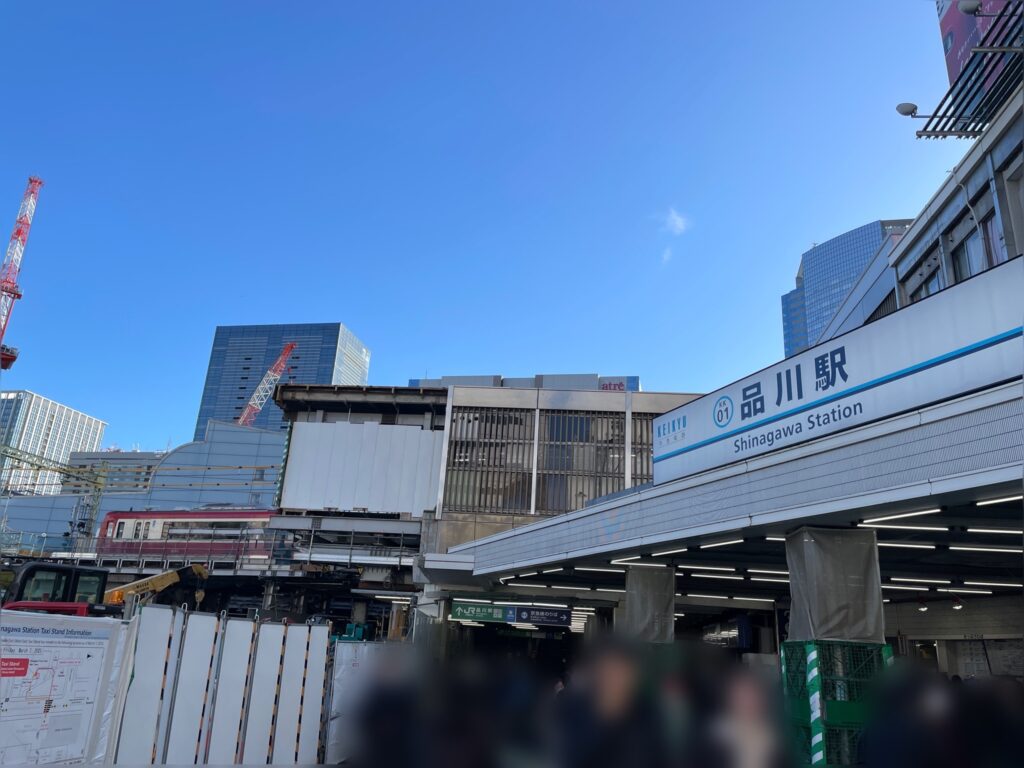
朝の東京・品川駅です。
This is Shinagawa Station in Tokyo in the morning.
★
今日はこれから、ずっと訪れてみたかった神奈川県の「川崎大師・平間寺(へいけんじ)へと向かいます。
Today, I’m heading to Kawasaki Daishi Heikenji Temple in Kanagawa Prefecture, a place I’ve always wanted to visit.
★
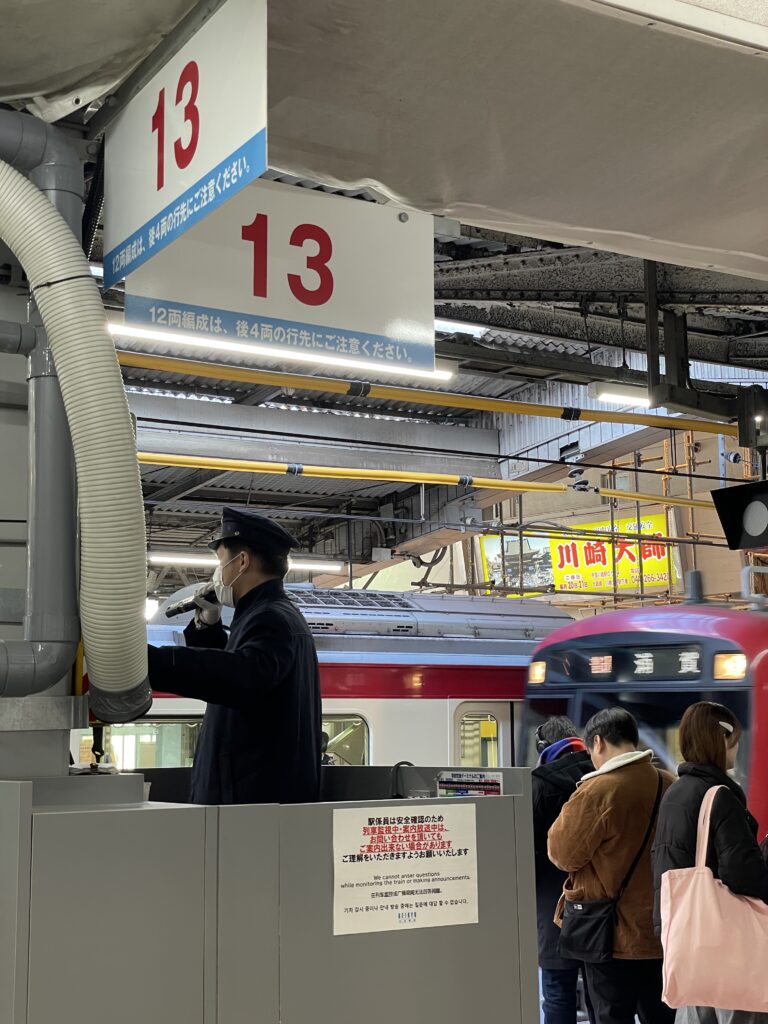
京急品川駅では、「DJ Station Staff」が活躍中!
京都では見ない光景なので、しばし見入ってしまいました。
背景にこれから向かう「川崎大師」の広告が見えますが、狙ったものではなく、このブログのコメント書き込み時に見つかった「偶然」です。
できすぎだ。。
At Keikyu Shinagawa Station, “DJ Station Staff” are hard at work!
It was a sight I’d never seen in Kyoto, so I was captivated for a while.
The sign visible in the background, with ” 川崎大師 ( = Kawasaki Daishi ) ” written in red letters on a yellow background, is an advertisement for the place I’m heading to. It wasn’t intentional; it was a coincidence, and I only noticed it while writing this comment.
It’s almost too good to be true.
★
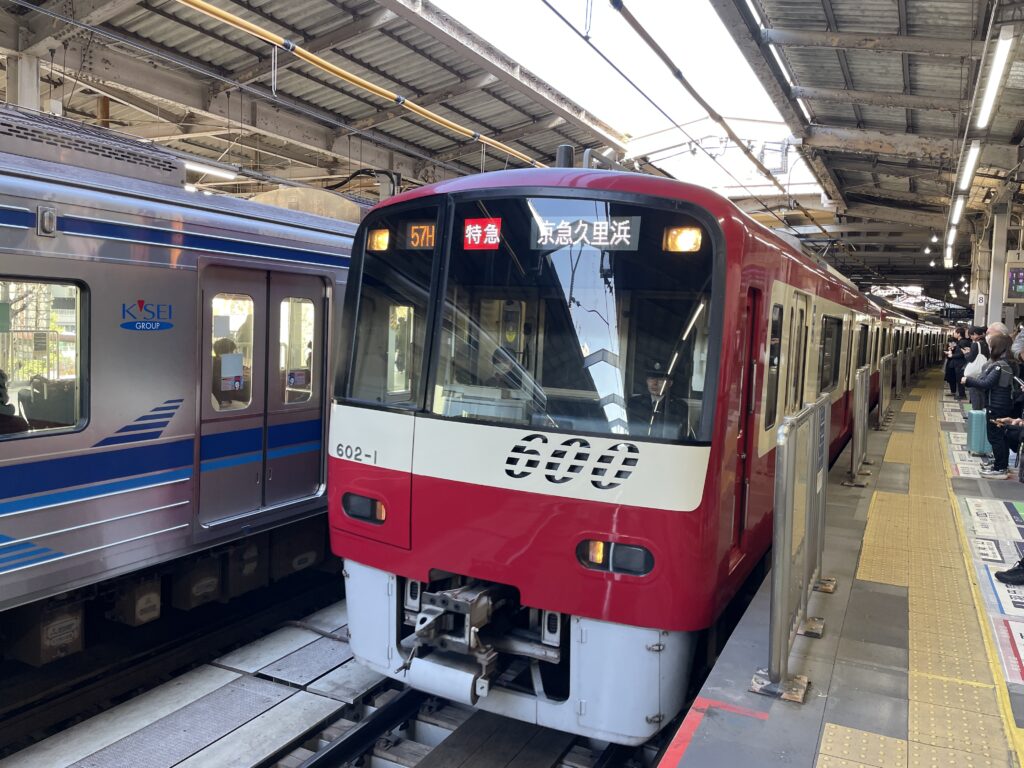
京急といえば、この赤い電車がポピュラーですが、
Speaking of Keikyu Railway, these red trains are the most well-known, but,
★
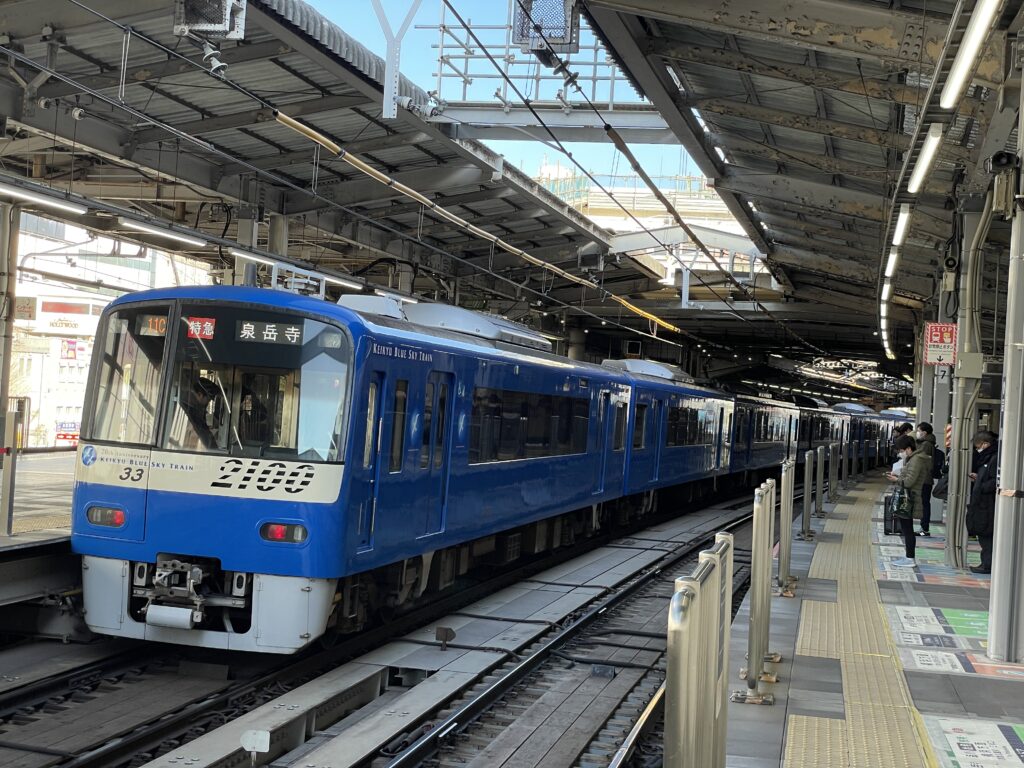
この日は2編成のみが走る、数少ない「KEIKYU BLUE SKY TRAIN」と呼ばれる車両に出会うことができました。
On this day, I was able to encounter one of the few trains known as the “KEIKYU BLUE SKY TRAIN,” of which only two sets are in operation.
★
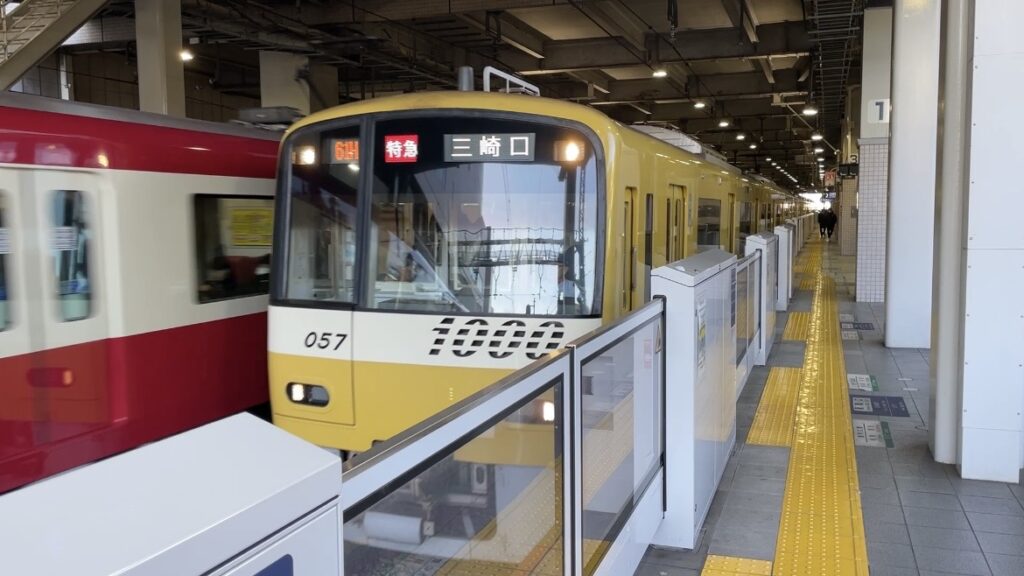
⬆️の画像は以前に撮影したものですが、京急には他にもこのように黄色い「KEIKYU YELLOW HAPPY TRAIN」と呼ばれる車両が1編成だけ走っています。
The image above was taken previously, but Keikyu Railway also operates one other train that is yellow, called the “KEIKYU YELLOW HAPPY TRAIN.”
★
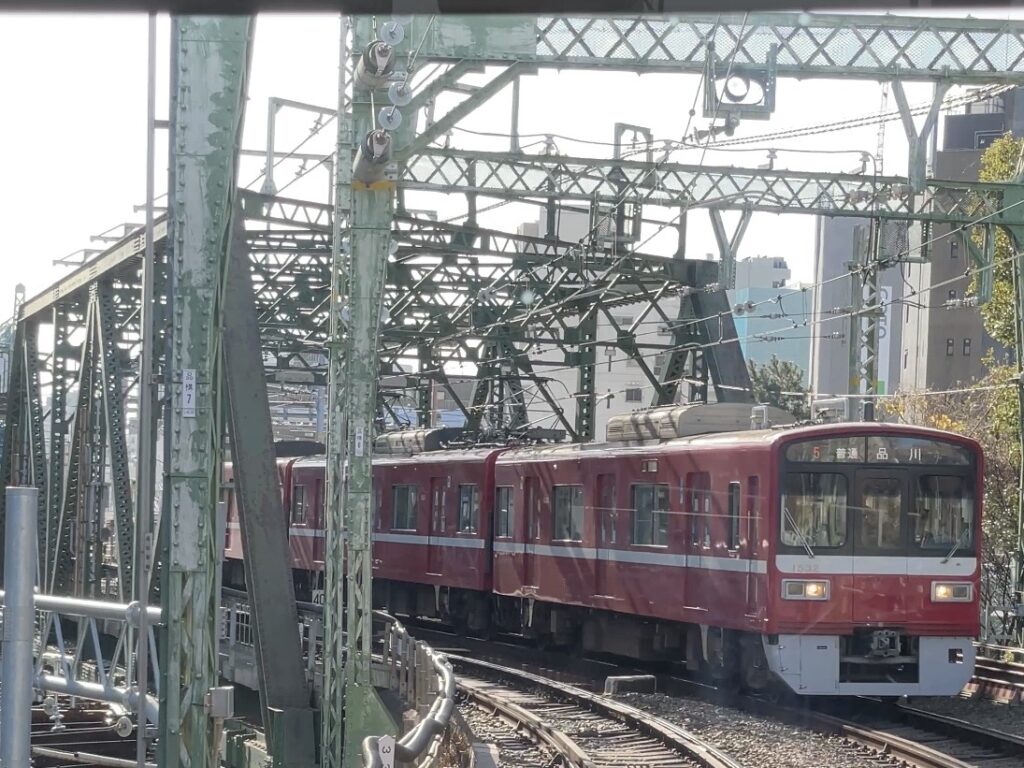
品川駅を出ると、すぐに左にカーブしてJR線をオーバークロスする鉄橋にさしかかります。
このあたりは制限速度が、たしか時速25kmだったので、列車は慎重に進んでゆきます。
After leaving Shinagawa Station, the train immediately curves to the left and approaches a railway bridge that crosses over the JR line.
The speed limit around here is, I believe, 25 km/h, so the train proceeds cautiously.
★
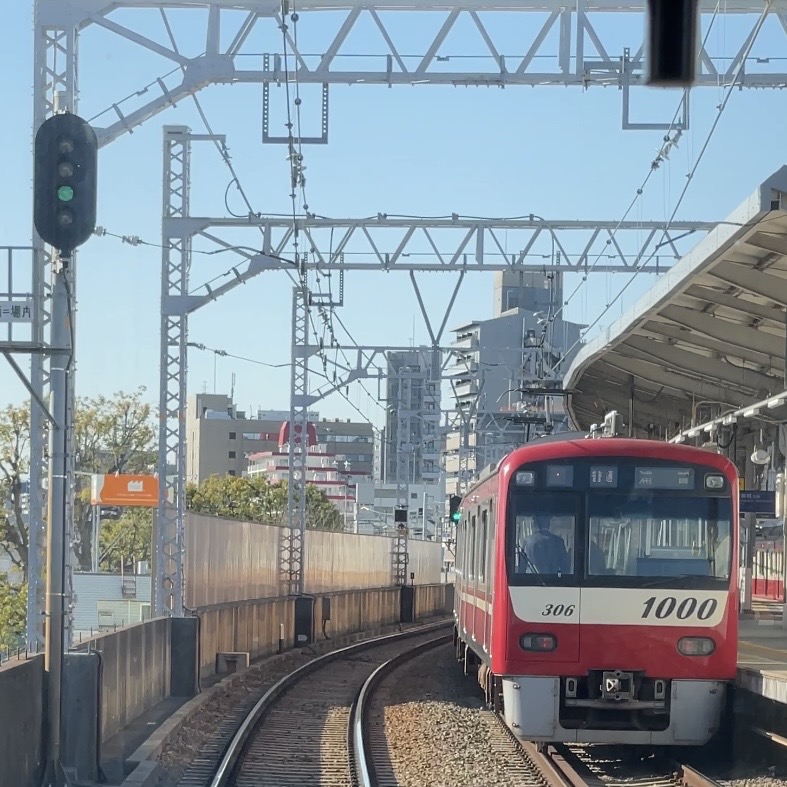
先ほどのカーブを過ぎると特急列車は本領を発揮し、普通列車を追い抜きながら最高時速120kmで疾走します。
After passing the curve I just saw, the express train really shows its true potential, speeding along at a maximum speed of 120 km/h while overtaking local trains.
★
鮫洲駅から平和島駅までの走行シーンです。
東京都品川区にある「鮫洲(さめず)」の地名の由来は、主に以下の3つの説が伝えられています。
①大鮫と観音像の伝説(最も有力な説)鎌倉時代、品川沖で死んだ大鮫(サメ)の腹を割いたところ、中から観音菩薩像が出てきたという言い伝えに由来します。これを珍しい瑞祥(めでたいしるし)とした鎌倉幕府の5代執権・北条時頼が、海晏寺という寺を建立(西暦1251年)したとされています。
②地形に由来する説この地域はかつて大きく海に洲(砂州)が突き出た地形で、「鮫浜」や「鮫頭崎」などと呼ばれていました。これに「洲」が組み合わさって定着したという説です。
③「砂水(さみず)」からの転訛干潮時に海中や浜辺の砂の中から清水が湧き出ることから、元は「砂水(さみず)」と呼ばれていたものが「さめず」に変化したという説です。
This is a scene of a train running on the Keikyu Line in Tokyo, from Samezu Station to Heiwajima Station.
When you translate the place names of these two stations into English, you’ll find some rather interesting meanings.
“Same(鮫)” = Shark.
“Zu(=Su=洲) = Land or shallow areas that protrude from the water surface due to the accumulation of sediment (for example, sandbars and sandbars).
“Heiwa(平和)” = Peace.
“Jima(=Shima=島)” = Island.
There are three main theories regarding the origin of the place name “Samezu” in Shinagawa Ward, Tokyo:
① The legend of the giant shark and the Kannon statue (the most likely theory) It is said that during the Kamakura period, when the belly of a giant shark that died off the coast of Shinagawa was cut open, a statue of Kannon Bodhisattva was found inside. It is said that Hojo Tokiyori, the 5th regent of the Kamakura shogunate, considered this a rare and auspicious sign and built a temple called Kai’anji (in 1251 AD).
② The theory that it is derived from the topography This area was once a large sandbar jutting out into the sea and was called “Samehama” or “Samegashirazaki”. This theory suggests that the name became established when “Samezu” was added to this.
③ A phonetic change from “samizu” (sand water): This theory suggests that the name originally came from “samizu” (sand water), because fresh water springs up from the sand in the sea or on the beach during low tide, and this later changed to “samezu”.
★
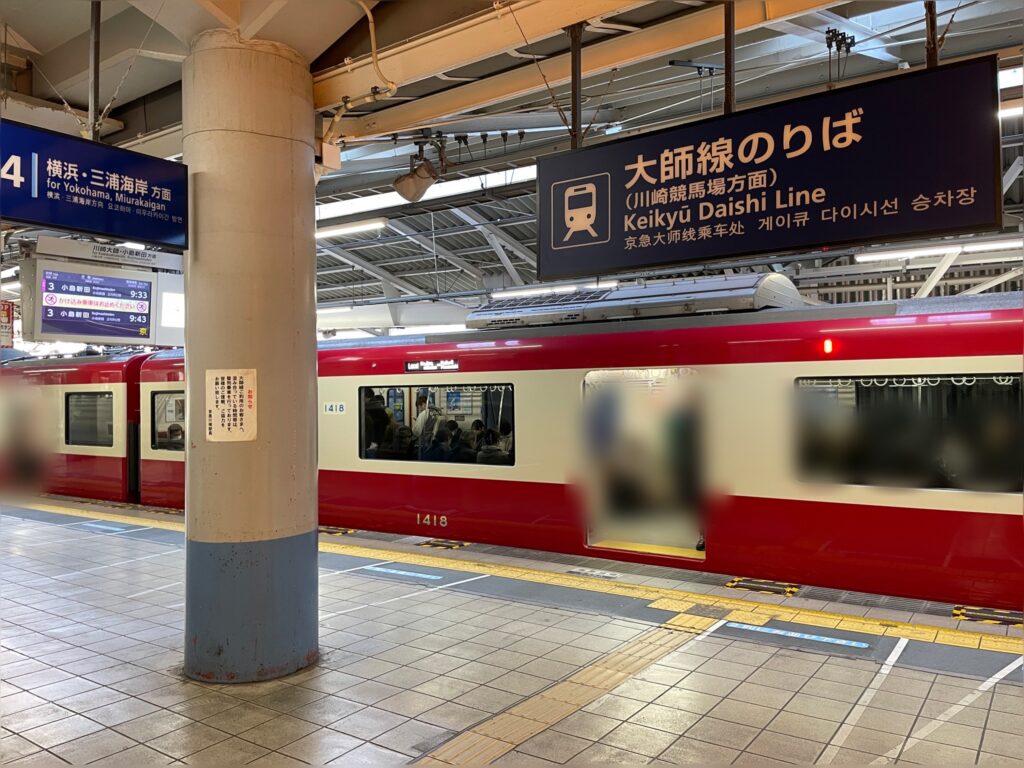
京急川崎駅に到着し、大師線の列車へ乗り換えです。
思っていた以上の混み具合だったので、列車を一本見送りました。
I arrived at Keikyu Kawasaki Station and transferred to a train on the Daishi Line.
It was more crowded than I expected, so I let one train go by.
★
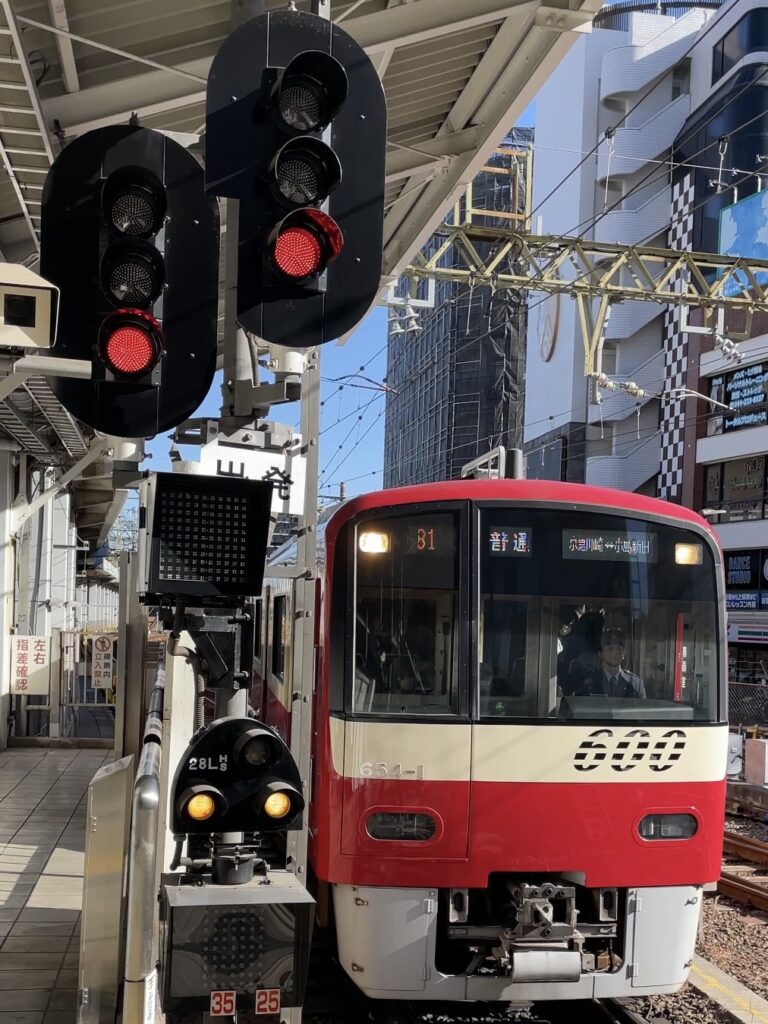
川崎大師のお参り前に、この列車で一旦終着駅を目指します。
Before visiting Kawasaki Daishi Temple, I’ll take this train to its final destination.
★
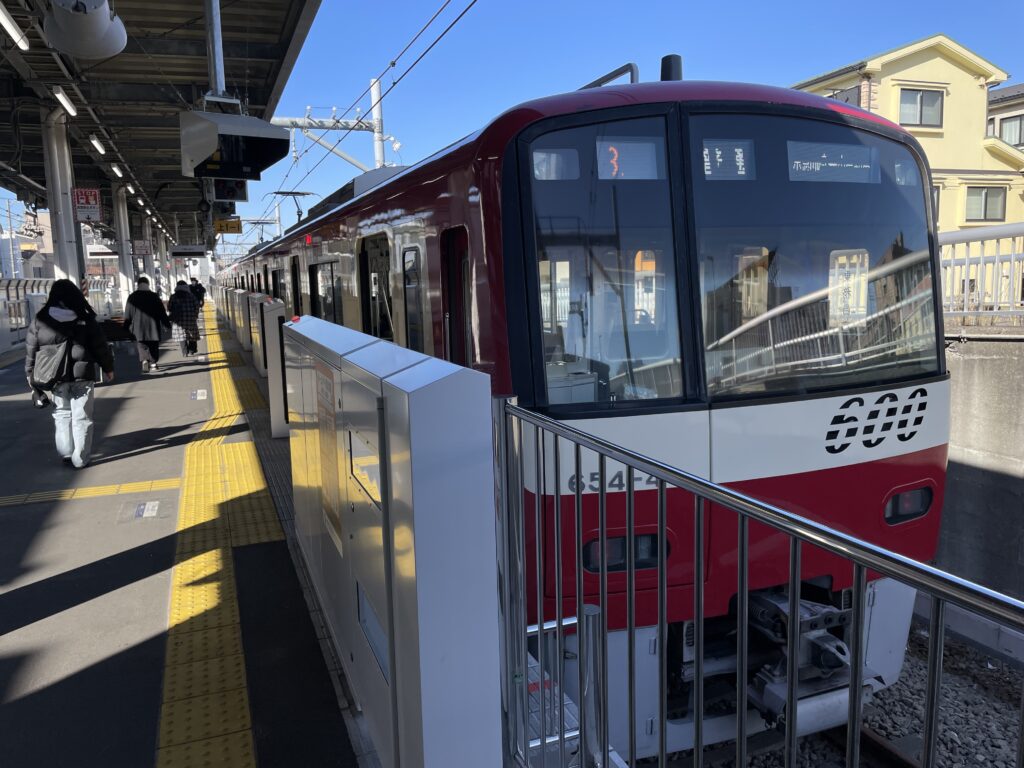
小島新田駅に到着です。
I have arrived at Kojima-Shinden Station.
★
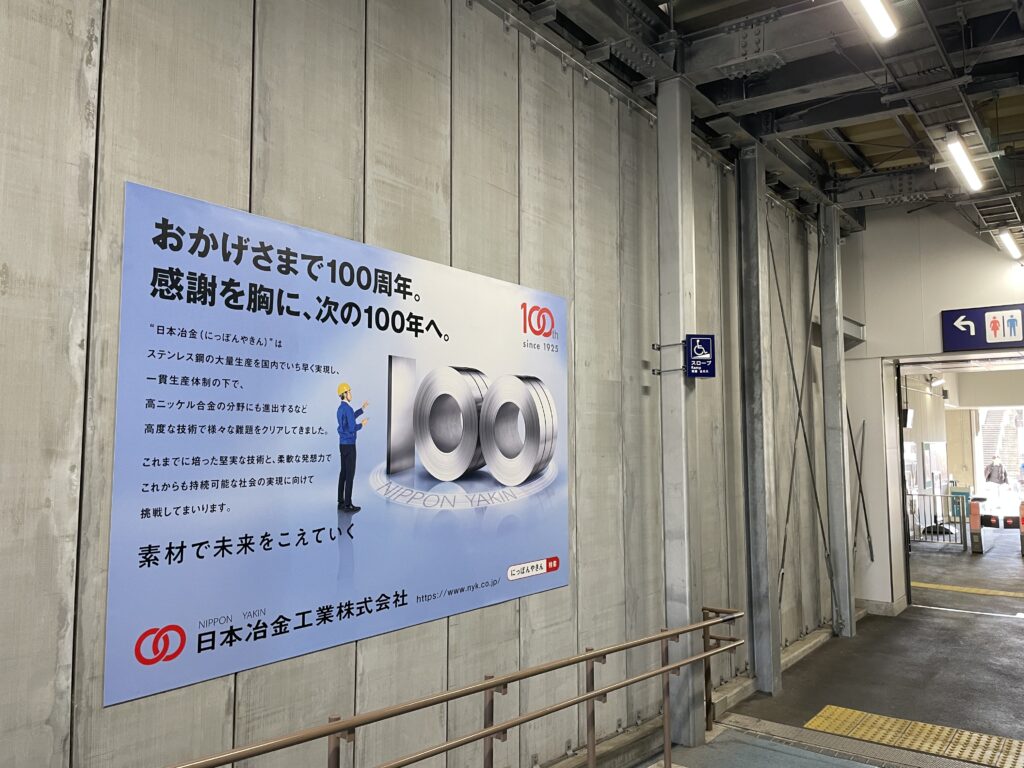
改札口までの通路には、京都府北部で以前お世話になった方に縁のある企業さんの広告がありました。
現地にいた頃は、この企業さんの本社所在地は縁遠いものでしたが、ここに来ると少し不思議な実感が湧き、当時のことをいろいろと思い出しました。
When I lived in northern Kyoto Prefecture, this company’s headquarters were a place I had no connection to, but coming here gave me a strange feeling of reality, and I remembered many things from that time.
★
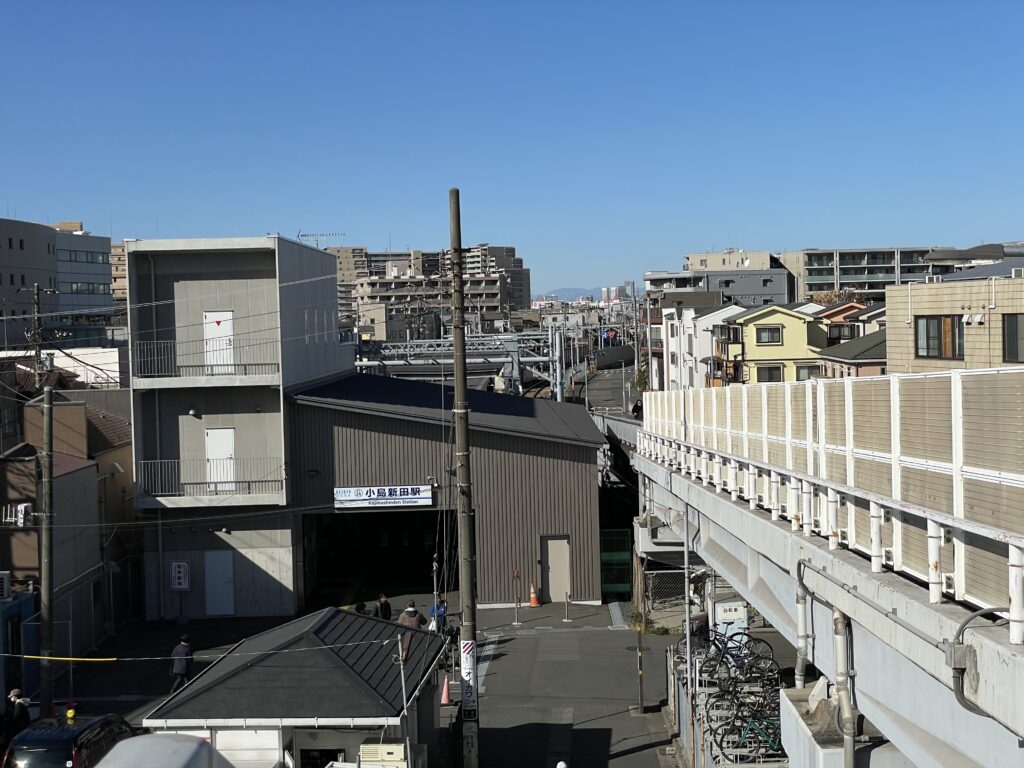
隣接する陸橋から見た、意外とコンパクトな小島新田駅。
最初の目的地は、すぐそばです。
Kojima-Shinden Station, as seen from the adjacent overpass, is surprisingly compact.
My first destination is very close by.
★
(つづく)
(to be continued)
★
ご拝読、有難うございました。
Thank you for your reading this post.
またのお越しを、お待ちしています。
I’m looking forward to your next visit.